"Adolf Hitler: The Rise of a Tyrant, the Horror of the Holocaust, and the Catastrophic Fall of the Third Reich"
Adolf Hitler: The Rise, Rule, and Ruin of a Dictator
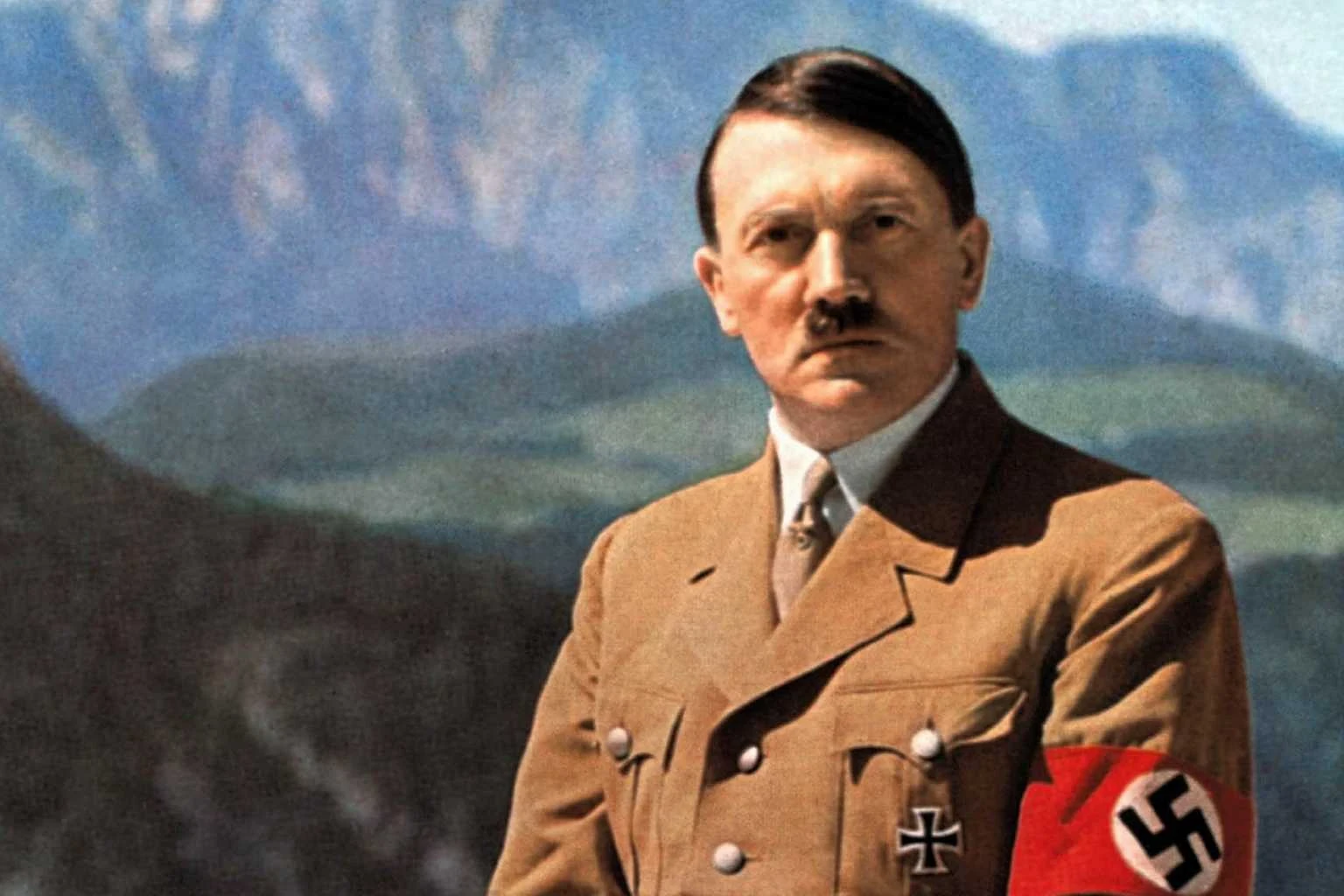
Adolf Hitler remains one of the most infamous figures in human history—a name forever synonymous with tyranny, genocide, and catastrophic war. Born on April 20, 1889, in the small Austrian town of Braunau am Inn, Hitler rose from obscurity to become the absolute dictator of Germany and the principal architect of World War II and the Holocaust. His worldview, built on racial supremacy and aggressive territorial expansion, plunged the world into a devastating conflict that claimed tens of millions of lives and left Europe in ruins.
Early Life and Formative Years
Hitler’s early life was marked by mediocrity, failure, and growing resentment. The son of Alois Hitler, a strict and domineering customs official, and Klara Pölzl, a devoted and gentle mother, young Adolf had a difficult relationship with his father, whom he both feared and disliked. Following his father’s death in 1903, Hitler neglected his studies and dreamed of becoming an artist. He moved to Vienna, where he twice failed the entrance examination for the Academy of Fine Arts, a rejection that crushed his artistic ambitions. For years, he lived a lonely, precarious existence, earning a meager living by painting postcards and advertisements and drifting between municipal hostels.
It was in Vienna that Hitler’s political awakening occurred. He became an avid reader of anti-Semitic and nationalist literature and admired the city’s popular mayor, Karl Lueger, who skillfully used anti-Semitic rhetoric to gain support. These years of hardship and exposure to extremist ideas planted the seeds for the toxic ideology that would later consume Germany and Europe.
In 1913, Hitler moved to Munich, Germany, to avoid compulsory military service in Austria. When World War I broke out, he volunteered for the Bavarian army. Serving as a messenger on the Western Front, he proved himself a courageous soldier, earning the Iron Cross First and Second Class. However, he never rose above the rank of lance corporal, as his superiors could “discover no leadership qualities in him”. The German defeat in 1918 came as a profound shock to Hitler, who, like many other nationalists, refused to accept the loss and instead blamed Jews and Marxists for betraying the army. This “stab-in-the-back” myth became a cornerstone of his political rhetoric.
The Rise to Power
After the war, Hitler remained in the army as an intelligence officer and was assigned to monitor a small political group in Munich: the German Workers’ Party (DAP). Instead of reporting on them, he was drawn to their nationalist, anti-Semitic, and anti-Marxist ideas and soon joined. He quickly proved himself a masterful public speaker, drawing large crowds with his passionate, theatrical oratory. In 1920, the party renamed itself the National Socialist German Workers’ Party (NSDAP)—the Nazi Party—and Hitler soon became its undisputed leader.
The early 1920s were a time of chaos in Germany, with economic devastation, hyperinflation, and widespread anger over the harsh terms of the Treaty of Versailles. In this volatile atmosphere, Hitler attempted to seize power by force. In November 1923, he led the Beer Hall Putsch, an armed uprising aimed at overthrowing the Weimar government. The coup failed miserably, and Hitler was arrested and sentenced to prison. During his brief incarceration, he wrote Mein Kampf (My Struggle), a rambling autobiography that outlined his core beliefs: racial purity, the superiority of the “Aryan” race, the need for Lebensraum (living space) in Eastern Europe, and the elimination of the Jews as Germany’s primary enemy.
After his release, Hitler changed tactics. Instead of violent revolution, the Nazis would seek power through legal, democratic means. For much of the 1920s, they remained a marginal force, winning just 12 seats in the Reichstag in 1928. However, the Great Depression, which began in 1929, was the turning point. As unemployment soared and faith in the Weimar Republic collapsed, millions of desperate Germans turned to radical parties. The Nazis promised to restore German pride, tear up the Treaty of Versailles, create jobs, and destroy the supposed enemies of the nation—Jews and Communists. Their message resonated powerfully. In the 1930 elections, the Nazis won 107 seats; by July 1932, they had become the largest party in the Reichstag with 230 seats.
Despite his popularity, Hitler was not simply elected to power. On January 30, 1933, a group of conservative politicians, believing they could control Hitler and use his popularity for their own ends, persuaded the aging President Paul von Hindenburg to appoint Hitler as Chancellor of Germany. It was a catastrophic miscalculation. Within months, Hitler dismantled German democracy. The Reichstag Fire Decree, issued after a suspicious fire in the parliament building, suspended civil liberties. The Enabling Act, passed in March 1933, gave Hitler’s cabinet the power to enact laws without parliamentary consent, effectively making him a dictator. By August 1934, following Hindenburg’s death, Hitler merged the presidency with the chancellorship, creating the new office of Führer—the absolute leader of Germany.
The Nazi Regime and the Path to War
Once in power, Hitler rapidly transformed Germany into a brutal totalitarian state. All political parties except the Nazi Party were banned. Trade unions were abolished, and their leaders were sent to newly established concentration camps. The Nazi state pursued a policy of Gleichschaltung (“coordination”), bringing every aspect of German life—from education and culture to the economy and law—under party control. The SS, led by Heinrich Himmler, became the instrument of terror, operating a vast network of camps and secret police.
Hitler’s economic policies focused on rearmament and public works projects, such as the construction of the autobahn network. By 1939, official unemployment had virtually disappeared, and many Germans, grateful for jobs and restored national pride, enthusiastically supported the regime. However, this prosperity was built on a foundation of militarism and racial persecution. In 1935, the Nuremberg Laws stripped Jews of their German citizenship, forbade marriage or relationships between Jews and non-Jews, and excluded them from public life. A campaign of organized violence, culminating in the Kristallnacht pogrom in November 1938, signaled the brutal intentions of the regime.
Hitler’s foreign policy was relentlessly aggressive. He withdrew Germany from the League of Nations, remilitarized the Rhineland in 1936, and forced the annexation of Austria in 1938—all in violation of the Treaty of Versailles. Later that year, at the Munich Conference, Britain and France, desperate to avoid war, allowed Germany to seize the Sudetenland from Czechoslovakia. This policy of “appeasement” only emboldened Hitler. In March 1939, German forces occupied the rest of Czechoslovakia, and Hitler turned his sights on Poland.
On September 1, 1939, German forces invaded Poland. Two days later, Britain and France declared war on Germany. World War II had begun. Historians generally agree that Hitler was principally and solely responsible for starting this global conflagration, a distinction that sets him apart from the leaders who had triggered World War I.
World War II and the Holocaust
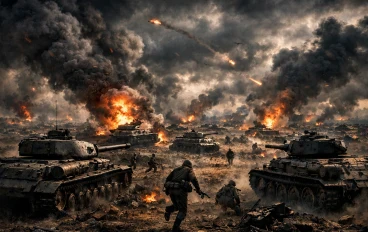
The early years of the war brought stunning German victories. Using the innovative Blitzkrieg (“lightning war”) strategy, Germany overran Poland, Denmark, Norway, the Netherlands, Belgium, Luxembourg, and, most shockingly, France in just six weeks. By the summer of 1941, Hitler controlled virtually all of continental Europe. In June 1941, he launched Operation Barbarossa—the massive invasion of the Soviet Union—which he saw as the final struggle for Lebensraum.
Simultaneously, Hitler presided over the greatest crime in history: the Holocaust. What began as persecution and forced emigration escalated into systematic, industrialized mass murder. Special killing squads, the Einsatzgruppen, followed the German army into the Soviet Union, shooting over a million Jews. By early 1942, Nazi leaders had agreed on the “Final Solution”—the plan to exterminate every Jewish man, woman, and child in Europe. Death camps such as Auschwitz-Birkenau, Treblinka, and Sobibor were constructed, where an estimated six million Jews, along with millions of other “undesirables”—Soviet prisoners of war, Roma and Sinti, homosexuals, political opponents, and people with disabilities—were murdered in gas chambers or died from starvation and disease. Hitler’s direct responsibility is clear: although no single signed order for the Holocaust has ever been found, his public statements, private monologues, and the testimony of those who carried out the genocide leave no doubt.
From late 1942 onward, the war turned decisively against Germany. The Soviet Red Army defeated the Germans at the brutal Battle of Stalingrad, and Allied forces invaded North Africa and Italy. On D-Day, June 6, 1944, the Western Allies landed in Normandy, opening a second front. By the spring of 1945, the Red Army had reached Berlin, while American, British, and French forces were advancing from the west.
Death and Legacy
On April 30, 1945, with Soviet troops less than a kilometer from his bunker, Adolf Hitler committed suicide. He shot himself in the head while his wife of just one day, Eva Braun, died by cyanide poisoning. Their bodies were doused in gasoline and set on fire, a final attempt to prevent their remains from falling into enemy hands. In his last will and testament, Hitler reaffirmed his fanatical anti-Semitism, commanding the German people to “uphold the race laws to the limit and to resist mercilessly the poisoner of all nations, international Jewry”.
The human toll of Hitler’s ambition is almost unimaginable. Approximately 29 million soldiers and civilians died as a result of military action in the European theater of World War II—the deadliest conflict in human history. An additional six million Jews were systematically murdered, along with millions of other innocent victims. Hitler’s pursuit of a “racially pure” Aryan society resulted in suffering on a scale previously unknown and serves as a chilling warning of the dangers of unchecked extremism, racial hatred, and the collapse of democratic institutions.
Hitler’s legacy is not merely one of destruction. The post-war world was fundamentally reshaped in his image’s negative: the establishment of the United Nations, the creation of the state of Israel, the Nuremberg trials that established the principle that individuals could be held accountable for crimes against humanity, and the division of Europe into Cold War blocs. Above all, Hitler stands as a cautionary figure—a reminder of how economic despair, political instability, and the manipulation of fear and hatred can lead a civilized nation down a path of unimaginable horror. The myth that Hitler was a madman acting alone is dangerous; his rise to power was made possible by the choices and complicity of millions.
Conclusion
Adolf Hitler was not born a monster, but he chose to become one. From his obscure beginnings as a failed artist in Vienna, through his rise as a charismatic political agitator, to his absolute dictatorship over Germany, his life is a story of how hatred, when harnessed to political ambition and national grievance, can unleash forces that destroy not only its intended targets but ultimately its creator as well. As the world continues to grapple with resurgent extremism and anti-Semitism, the history of Hitler and the Third Reich remains urgently relevant. It reminds us that democracy is fragile, that evil is not inevitable but is a choice, and that eternal vigilance remains the price of liberty. The ruins of the Reich, the ashes of the Holocaust, and the millions of graves across Europe and beyond stand as an eternal monument to the catastrophic consequences of abandoning reason for rage and humanity for hate.