


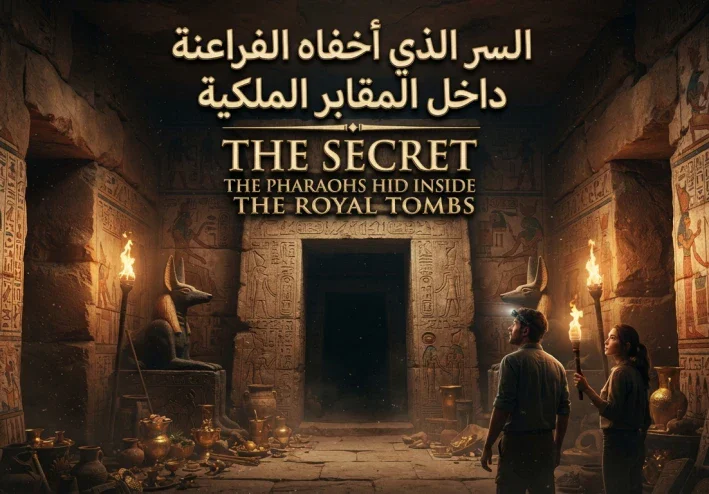
The secret that the pharaohs hid inside the royal tombs
The Secret the Pharaohs Hid Inside the Royal Tombs
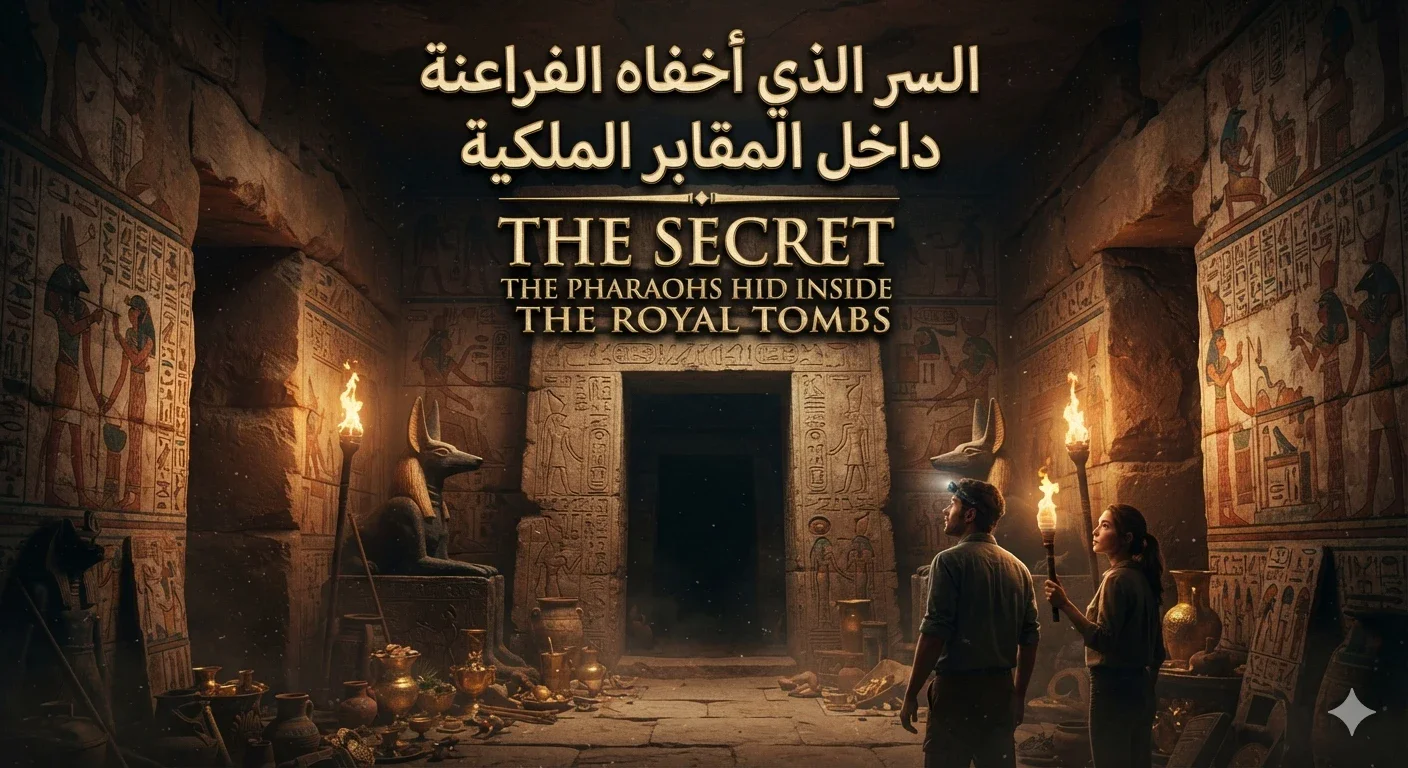
For thousands of years, the ancient Egyptians buried their kings inside massive tombs, leaving behind inscriptions, symbols, and treasures that still arouse the world's curiosity to this day.
But the question that puzzled researchers is not only: What did the pharaohs leave inside their tombs?
But also: Why did they make all this effort to conceal and protect the world of the dead?
A Journey to the Afterlife
For the ancient Egyptian, death was part of a new journey, not merely the end of life.
That is why the Egyptians cared about preserving the deceased's body and preparing the tomb with what they believed he would need in the afterlife. Funerary texts, spells, and rituals appeared that aimed to help the deceased on his journey.
Therefore, the tomb was not merely a place to bury the body, but part of an integrated religious conception.
Why Were the Tombs Filled with Symbols?
When entering some ancient Egyptian tombs, a visitor can notice the abundance of inscriptions, drawings, and symbols.
These drawings were not merely for decoration.
Many of them were connected to religious beliefs and funerary rituals, and depicted the gods, the journey to the afterlife, and scenes from daily life.
Through these drawings, archaeologists were able to learn a great deal about ancient Egyptian society, from clothing, food, and agriculture to occupations and rituals.
Tutankhamun's Tomb
In 1922, British archaeologist Howard Carter discovered Tutankhamun's tomb in the Valley of the Kings.
The discovery was extraordinary because of the large number of funerary artifacts found inside the tomb, including the famous golden mask.
Tutankhamun became one of the most famous pharaohs of Egypt in the modern world, not only because of his short reign, but also because of the condition of the tomb and the artifacts discovered inside it.
Was There Really a "Curse"?
One of the most famous stories associated with Tutankhamun's tomb is what is known as the pharaohs' curse.
In the 1920s, the press spread stories about the deaths of some people connected to the discovery of the tomb, linking those deaths to an ancient curse.
But the idea of the curse gradually became a widespread popular legend, and there is no scientific evidence proving the existence of a supernatural force associated with the tomb.
Here one of the most fascinating points in history emerges: sometimes a story begins with a real incident, then newspapers and popular accounts add details that make it more mysterious.
What Did the Pharaohs Actually Hide?
Perhaps the real "secret" of the ancient Egyptian tombs is not the existence of supernatural forces, but the knowledge preserved by these tombs.
The inscriptions, papyri, statues, and funerary objects provide invaluable information about ancient Egyptian civilization.
Every tomb can be like a message from the past, telling us how the Egyptians viewed life, death, power, and religion.
Secrets Yet to Be Discovered
Despite more than a century having passed since the beginning of modern archaeological discoveries, Egypt still contains many archaeological sites that are under investigation and excavation.
And every time a new tomb, building, or artifact is found, new questions arise about its owners, its function, and the circumstances surrounding it.
This is why Egyptian history is still capable of attracting millions of people around the world.
Conclusion
The pharaohs did not need legends to leave behind a mystery.
They left us something even more fascinating: an entire civilization whose remains still help us understand the human being who lived thousands of years ago.
Perhaps the greatest secret left by the ancient Egyptians is that some questions are still waiting for their answers to this day.
The more we discover something new from the past, the more we discover that there is another question waiting for us behind it.






please login to be able to comment