

في هذا المقال
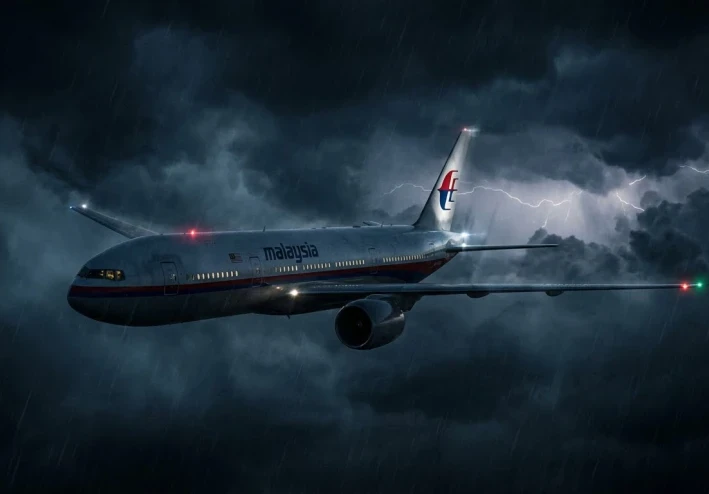
On March 8, 2014, a Boeing 777 carrying 239 people took off from Kuala Lumpur, heading to Beijing. The flight was completely normal during the first hour. However, as the aircraft approached the border between Malaysian and Vietnamese airspace, the transponder was manually switched off. The final words from the cockpit were a calm, "Good night, Malaysian three-seven-zero." Minutes later, the massive commercial plane vanished from civilian radar screens into thin air.
The Secret U-Turn and Ghost Flight
What baffled international investigators was the military radar data discovered days later. After disappearing from civilian screens, Flight MH370 made a sharp, unexpected U-turn, flying back across the Malaysian peninsula. The jet turned south toward the vast, isolated waters of the southern Indian Ocean. For nearly seven hours, the aircraft flew as a "ghost flight," with no communication from the crew or passengers, until it ran out of fuel and crashed.
The Most Expensive Search Operation in History
Following the tragic disappearance, an unprecedented search operation was launched covering thousands of square kilometers of the ocean floor. Ships, advanced sonar equipment, and deep-sea submarines scanned the dark depths for years, spending over $150 million. Despite the massive scale, the main wreckage of the aircraft and the vital black boxes were never discovered. The deep ocean successfully hid all the physical evidence from the world.
The Most Famous Theories Explaining the Mystery
With zero answers from the ocean floor, aviation experts and detectives proposed several chilling theories regarding the final hours:
1. Pilot Mass Suicide: Some investigators believe the captain manually locked the co-pilot out of the cockpit, depressurized the cabin to incapacitate everyone on board, and flew the plane to its remote watery grave.
2. A Sudden High-Tech Hijacking: Another theory suggests a brilliant cyber-hijacker accessed the plane's internal electronics bay, disabling all tracking systems and taking remote control of the flight.
3. Catastrophic Mechanical Failure: Skeptics argue that a sudden electrical fire or explosive decompression forced the crew to turn back, but toxic fumes quickly knocked them out before they could land.
Conclusion
In recent years, a few confirmed pieces of debris have washed up on the shores of Africa and islands in the Indian Ocean, proving the plane did indeed crash in the south. However, without the black boxes, the true cause of the disaster remains a profound riddle. Flight MH370 completely changed global aviation tracking regulations forever. Do you think we will ever find the truth, or will it remain an eternal mystery? Share your thoughts below!
تابع جديد Adham
اختر إشعارات الموقع أو البريد أو الاثنين. الزائر يقدر يشترك ببريده دون تسجيل حساب.
الإبلاغ عن المقال
لو لاحظت مشكلة في المحتوى، أرسلها لفريق المراجعة. لن تظهر بياناتك لكاتب المقال أو للقراء.
تعذّر إرسال البلاغ الآن. حاول مرة أخرى لاحقًا.
سجّل الدخول لإرسال بلاغ







النقاش
التعليقات (0)
فكرة تضيفها، أو سؤال يفتح حوارًا.
الرجاء تسجيل الدخول لتتمكن من التعليق