

في هذا المقال
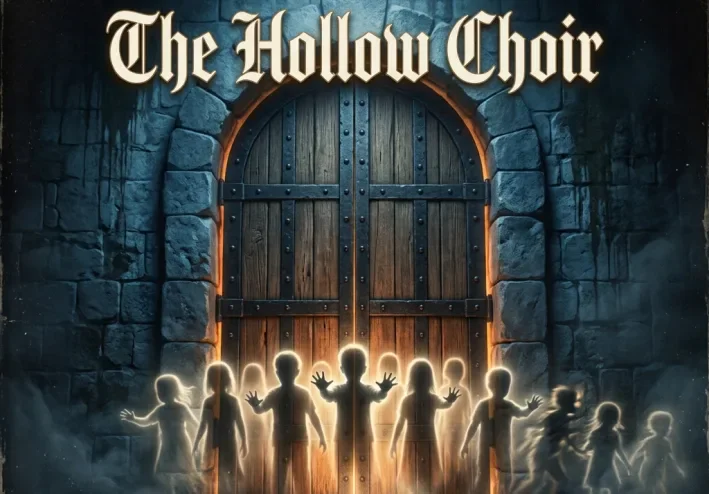
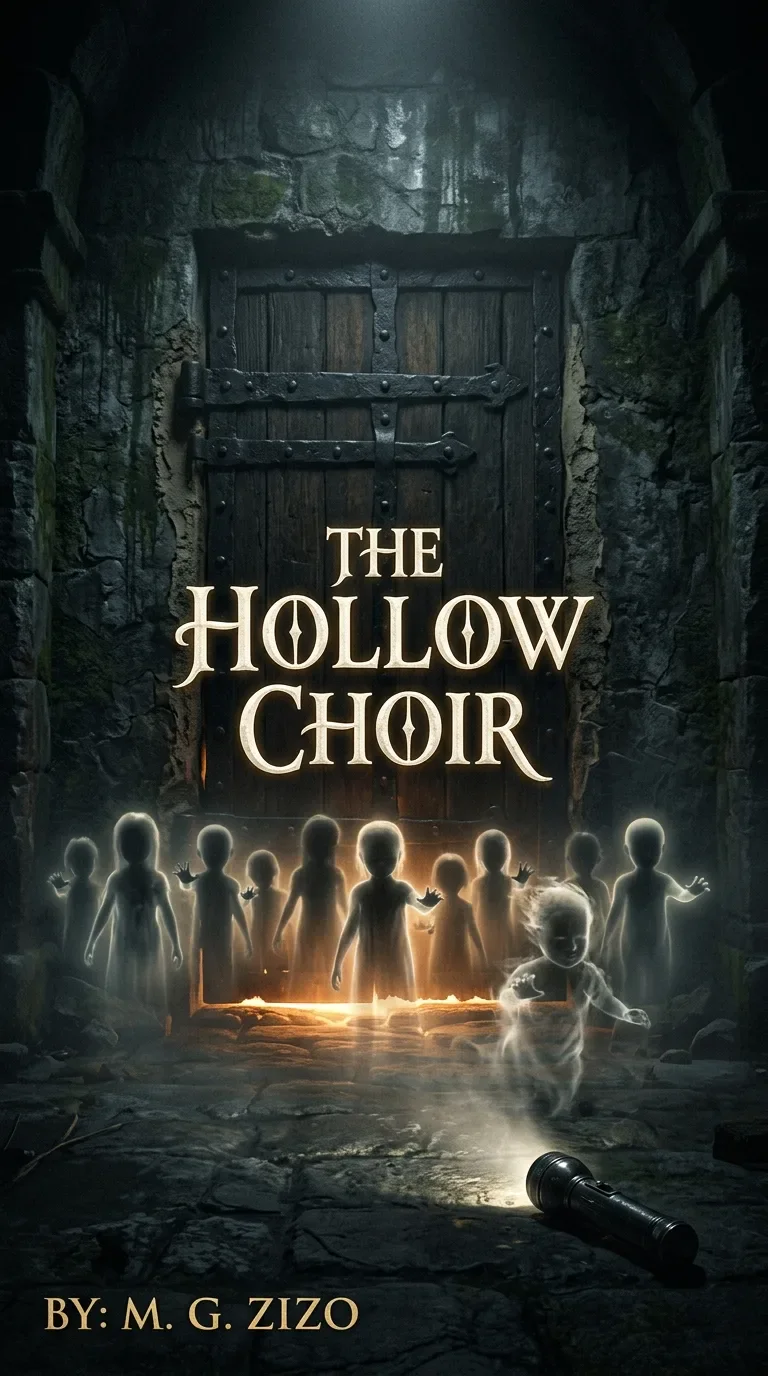
The Hollow Choir
The Third Night
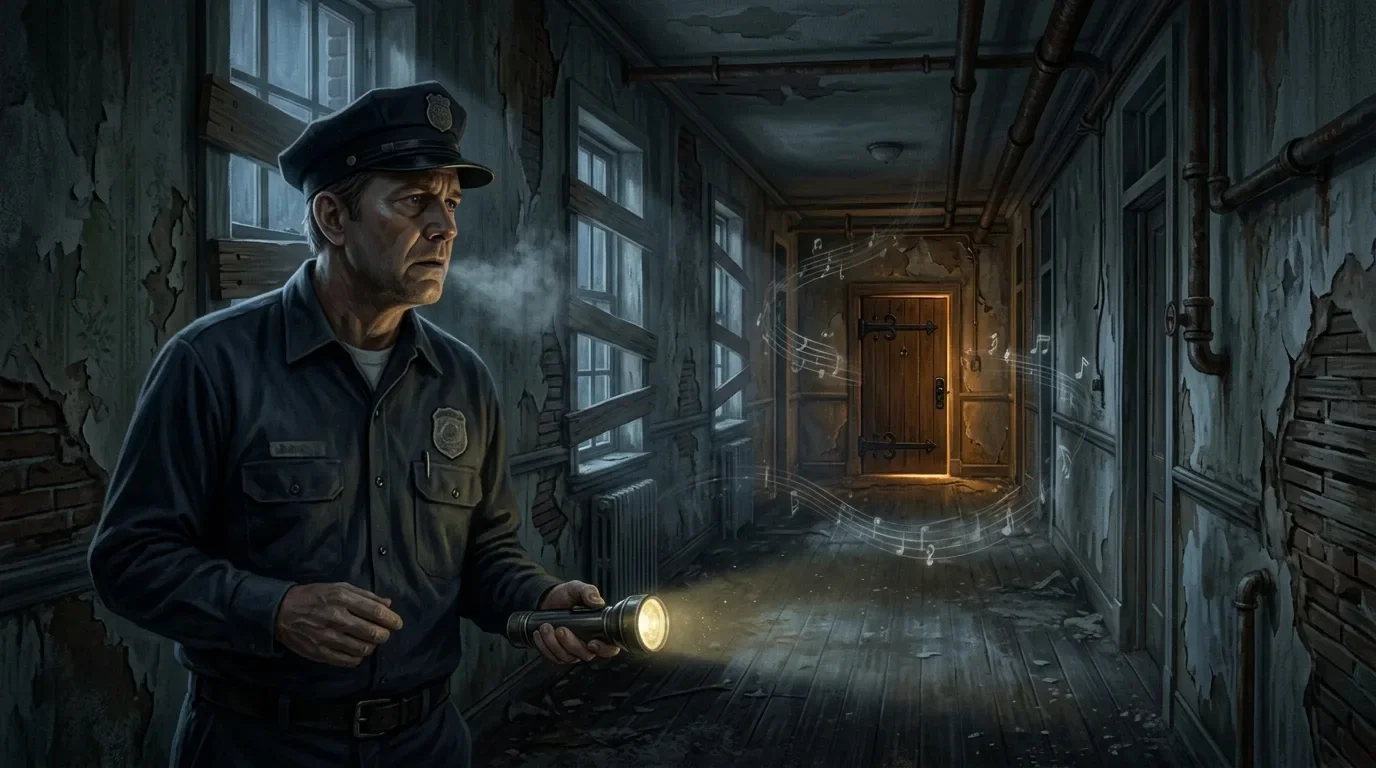
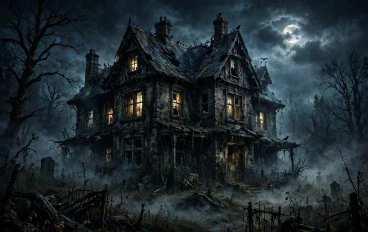
Marcus Webb had worked security for eleven years. In that time he had learned that old buildings talked pipes clanked, floors settled, wind found gaps in window frames and turned them into low, tuneless whistles. He had a name for every sound St. Agatha's Home for Children made after dark. By his third night on the renovation site, he thought he'd heard them all.
He was wrong.
It started just after eleven a single note, high and clear, drifting from somewhere below the east wing. Marcus lowered his coffee. The note held, then a second joined it, then a third, until what he was hearing wasn't a note at all but a chord, sung by voices that were unmistakably young.
Children's voices. Singing a hymn he almost recognized, in a building that had been empty for thirty-seven years.
He told himself it was a radio. A neighbor's window left open. He told himself this all the way down the east wing hallway, flashlight shaking in his hand, until he reached the door at the end of it a door that hadn't been on any blueprint he'd been given, set into a wall that predated the rest of the building by decades.
The singing was coming from behind it.
Marcus pressed his palm flat against the wood. It was warm, though the hallway around him was cold enough to see his breath. Warm like something breathing.
"Hello?" he said, and hated how small his voice sounded.
The singing stopped.
In the silence that followed, Marcus heard something almost worse than the choir a single set of small, bare feet, walking unhurried across a stone floor, coming toward the door from the other side.
His radio call to the site office went out at 11:47 PM. It was the last anyone heard from him. When the morning crew arrived, his flashlight was found at the base of the sealed door, still switched on, its beam pointed at a threshold with no visible way through.
Three weeks earlier, Claire Ashby had stood in that same hallway with a set of renovation blueprints and no reason to be afraid of anything.
What the Records Don't Say
The blueprints called it "Basement Room C Purpose Unknown," which Claire had learned in fifteen years of restoration work was architectural shorthand for something the original owners had wanted forgotten.
"Foreman's asking if you want the east wing sealed off or opened up first," David Reyes said, jogging to catch up with her clipboard-first stride through what had once been a dormitory. Sunlight cut through boarded windows in blades, catching dust that hadn't moved in decades. "Given what happened to the last set of contractors who took this job."
"What happened to them?"
"They quit. All twelve, same week, no notice." David said it like a joke, but his eyes weren't laughing. "Guy who ran the crew told my cousin the building 'didn't want to be touched.'"
Claire had heard versions of this story on every job that came with a dark local reputation abandoned asylums, shuttered hospitals, houses where something bad had happened once and everyone remembered exactly what. Usually it meant nothing except that people were superstitious and buildings were old.
She wasn't ready, yet, to consider that this one might be different.
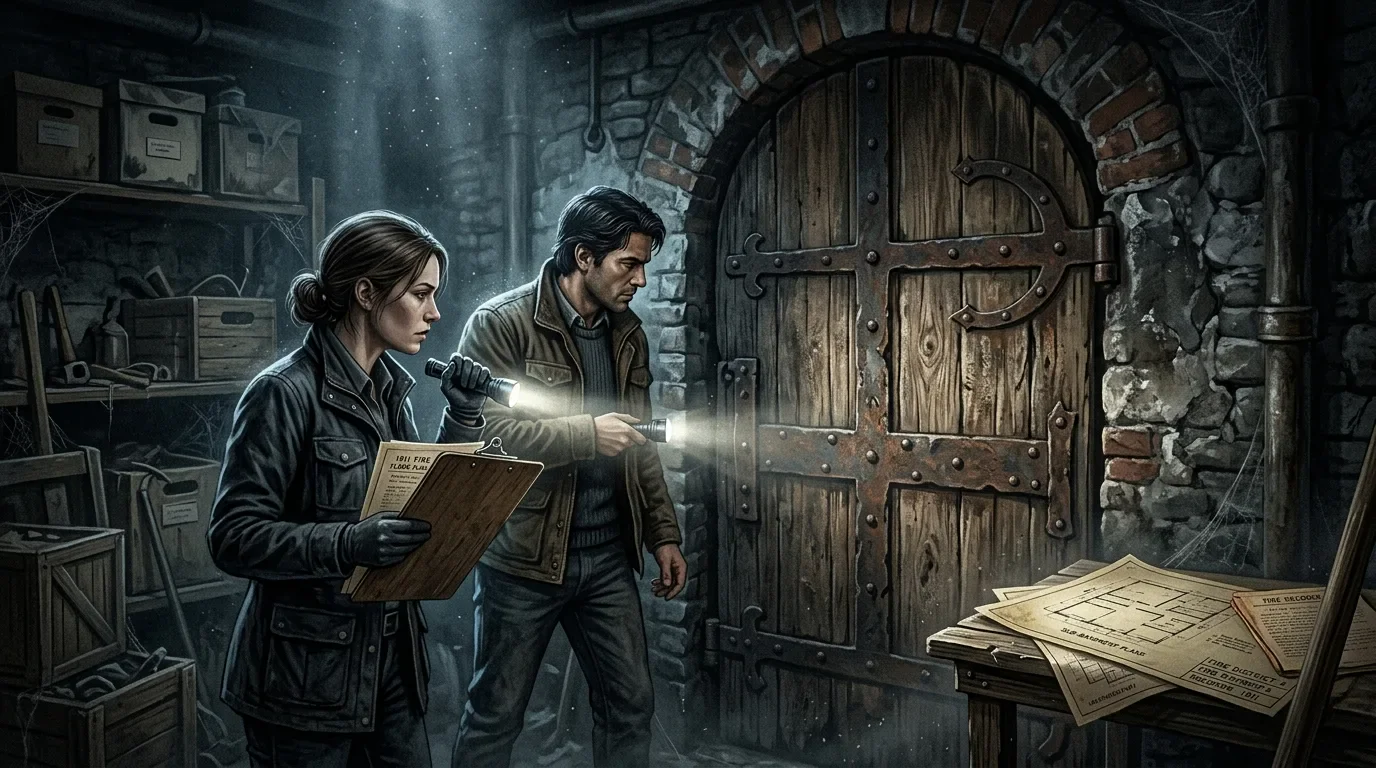
They found the sealed door in the sub-basement two days later a slab of oak reinforced with iron bands, no handle, no keyhole, mortared into the wall as if it had never been meant to open again.
"There's nothing about this on any plan," Claire said, running her light along the hinges. "Not the 1889 original, not the 1911 renovation."
"1911," David repeated. "Isn't that the year"
"The fire. Yeah." Claire had read the county records the week before taking the job: a single paragraph, vague and clinical, describing a fire in the east wing dormitory that claimed the lives of eleven children and one staff member. Cause: undetermined. No further investigation noted. "Records say it happened upstairs. Not down here."
That night, working late alone to finish her measurements, Claire heard the first note.
She told herself it was pipes.
Sister Agnes
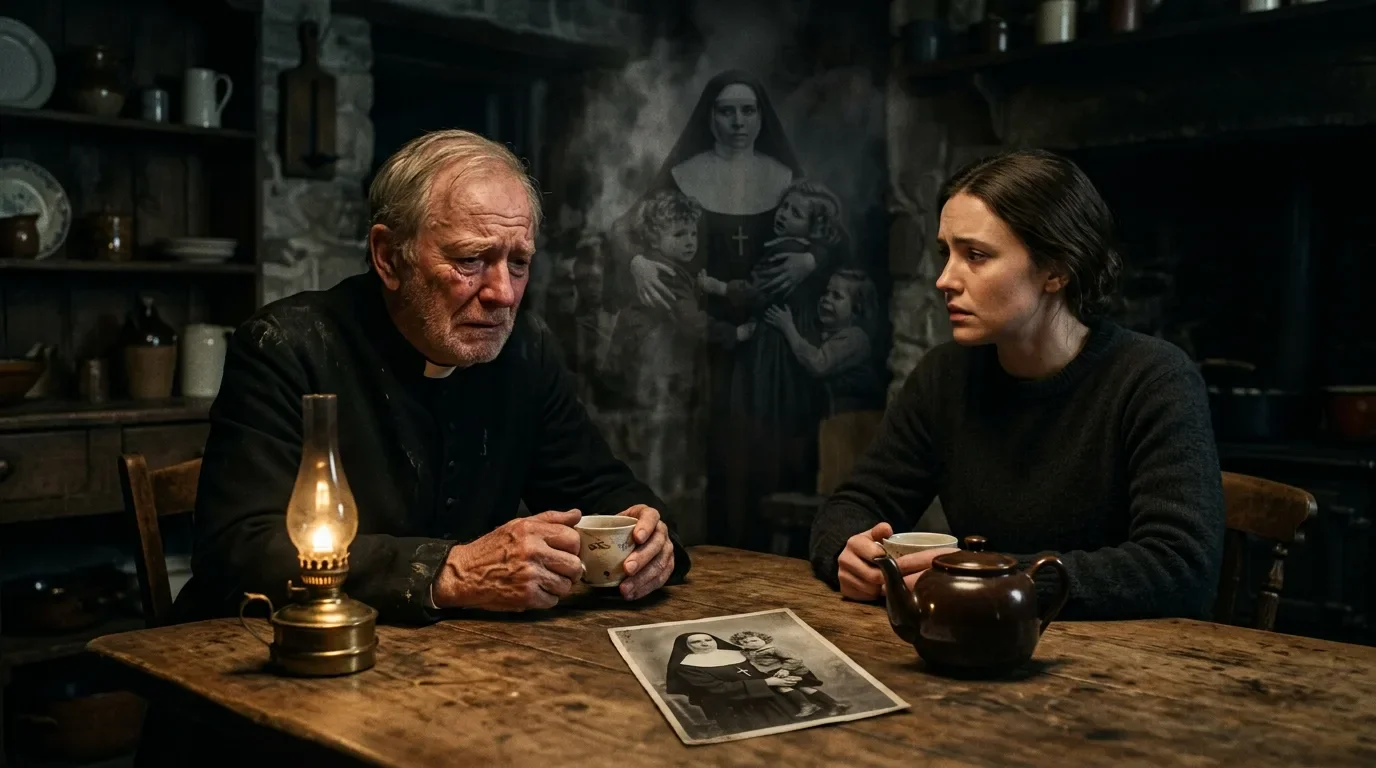
Father Whitfield was eighty-three years old and had spent sixty of those years trying not to think about St. Agatha's.
"You shouldn't have come here asking about that place," he told Claire, though he let her sit in his kitchen anyway, and poured her tea with hands that shook slightly around the kettle. "Some doors are shut for a reason."
"Strange things are happening on my site," Claire said. "Voices. Singing. I need to understand what I'm dealing with."
The old priest was quiet for a long time.
"There was a chaplain here, before my time Father Corwin. Officially he was dismissed from his post in 1910 for 'conduct unbecoming.' Unofficially" Whitfield's jaw tightened. "Unofficially, he believed certain children were possessed. Difficult children. Grieving children. Children who cried too much, or not at all. He performed rites on them. Private ones, at night, in a chapel he had built in secret beneath the dormitory, because the diocese would never have sanctioned what he was doing."
"The room with no door," Claire said.
"The room that was supposed to have no door. Ever again." Whitfield finally met her eyes. "Sister Agnes worked here then. She tried to stop him wrote letters to the bishop that were never sent, tried to get the children out of the building the night of the fire. She died with them. Eleven children, and Agnes makes twelve, though the official count has always left her out."
"And Corwin?"
"He walked out of that fire without a mark on him. Told the county the children died accidentally, in their sleep, of smoke. No one questioned a priest's word in 1911." Whitfield's cup rattled against its saucer. "I've spent my whole ministry making sure no one dug this back up. I failed. I'm sorry, Miss Ashby, but I think whatever you disturbed down there it isn't finished being twelve voices. It's building toward twelve. And when it has all of them, singing together, complete"
"What happens?"
"I don't know," the old priest whispered. "I only know that Agnes died trying to stop it from being sung to the end."
Eleven, and Counting
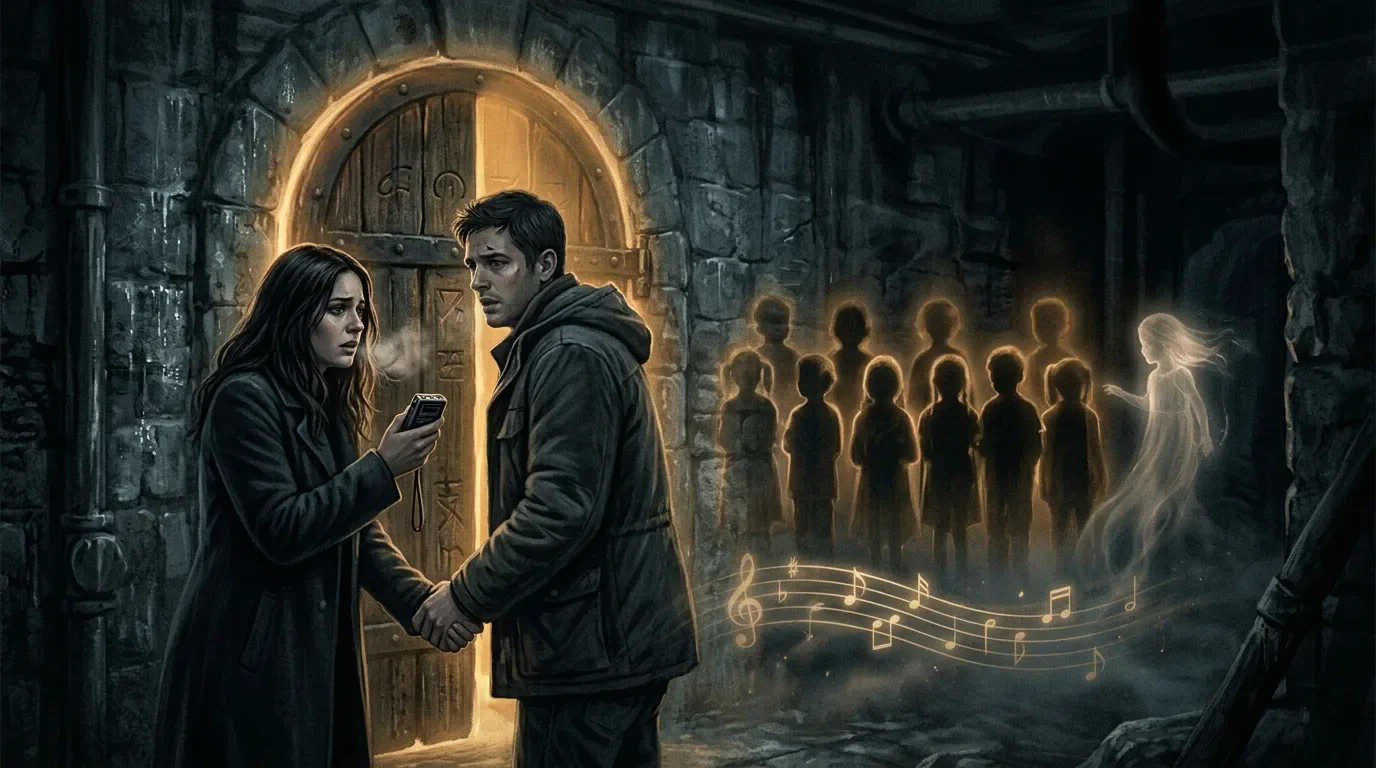
Claire counted the voices that night, alone in the sub-basement with a recorder in one shaking hand and Whitfield's warning in her ears.
One. Two. Three.
She had heard three the first night. Five, the second. Tonight, standing before the sealed door with David refusing to leave her side, the chord that rose from behind the oak was unmistakably layered voice over voice over voice, young and clear and utterly without malice, which was somehow the most frightening thing about it.
She counted ten distinct notes before her nerve broke enough to stop.
"Ten," she told David, her back pressed to the cold stone wall. "Whitfield said eleven children died in that fire. Twelve, counting Agnes. But Agnes died trying to stop the choir, not join it. So the choir is the eleven children and it only has ten."
"So it needs one more."
"One more to be complete." Claire looked at the door warm, she now knew, the way something alive is warm. "But Whitfield said it's building toward twelve. Not eleven. Twelve. Which means it needs two more voices. The eleventh child, and then someone else. Someone who isn't a child at all."
"Why would it need that?"
Claire didn't answer right away. She was thinking of the personnel file she'd found that afternoon, buried in a filing cabinet nobody had cleared out: a photograph of Sister Agnes, young and solemn in her habit, holding the hand of a boy the caption identified only as unclaimed. And beneath it, in ink so faded she'd nearly missed it, a single line in Agnes's own hand, dated the night of the fire:
If it cannot have twelve, it will wait for whoever comes closest to loving them.
"Because the twelfth voice isn't about completing a number," Claire said slowly. "It's about completing the song. Eleven children who died scared and alone, and one voice that loves them enough to sing with them. That's what Agnes was trying to do she died trying to reach them. But she died before she could. So the choir waits. Every renovation crew that's come through here for thirty years has quit within a week. Nobody stayed long enough to hear how close it was getting. We're the first ones who stayed."
"Why would we be the ones it needs?"
Claire didn't answer right away. She was thinking of the voice count ten now, but growing. She was thinking of the hymn she'd heard in her own head since the first night, the one her mother used to sing her to sleep, forty years and four hundred miles from this basement, in a language the choir had no way of knowing. She was thinking of the way the door warmed when she stood near it, the way it seemed to lean toward her, the way something behind it had started to hum not a child's note anymore, but something lower, richer, almost like a woman's voice joining in.
It wasn't Agnes. Agnes was gone. But someone else was being invited.
"Because we're the ones who stayed," Claire said finally. "And the choir has been waiting a very long time for someone to love them enough to finish the song."
Somewhere behind the oak, impossibly close now, the humming stopped. In the silence, a single set of small, bare feet began to walk not toward the door this time, but away from it, back into the dark. And in their place, a new sound rose: a man's voice, low and unafraid, singing the opening note of a hymn only Claire recognized.
The door, for the first time, was unlocked.
تابع جديد M. G. Zizo
اختر إشعارات الموقع أو البريد أو الاثنين. الزائر يقدر يشترك ببريده دون تسجيل حساب.
الإبلاغ عن المقال
لو لاحظت مشكلة في المحتوى، أرسلها لفريق المراجعة. لن تظهر بياناتك لكاتب المقال أو للقراء.
تعذّر إرسال البلاغ الآن. حاول مرة أخرى لاحقًا.
سجّل الدخول لإرسال بلاغ





النقاش
التعليقات (0)
فكرة تضيفها، أو سؤال يفتح حوارًا.
الرجاء تسجيل الدخول لتتمكن من التعليق