
في هذا المقال
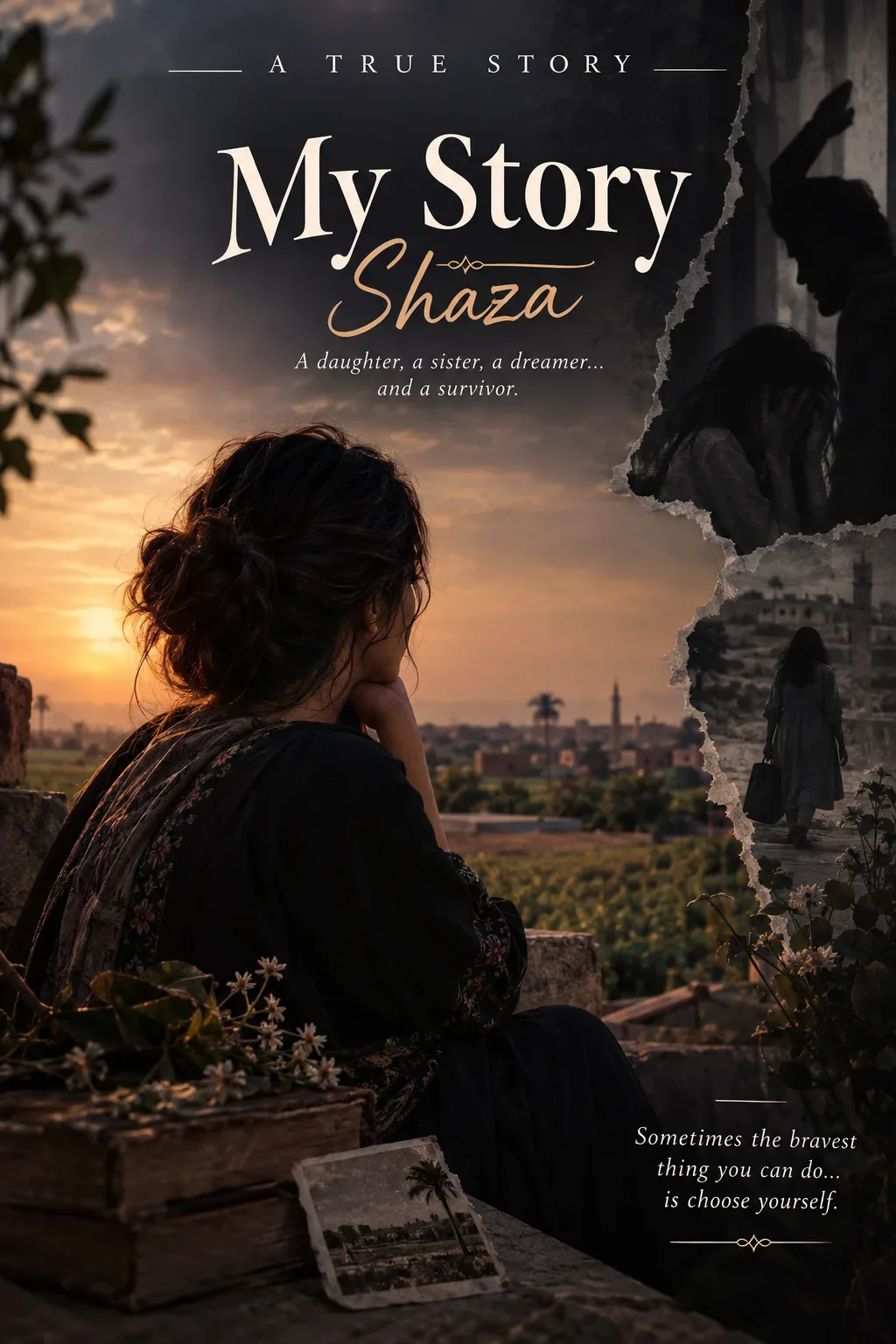
My True Story: A Family Torn Apart by a Failed Marriage
Hello, everyone.
My name is Shaza. I am eighteen years old, a graduate of an agricultural secondary school, and I come from a village in Upper Egypt.
I am writing this story because it is real, and because I have carried its memories inside me for years. I hope that putting everything into words will help relieve some of the weight I have been carrying. I know that some of the things I did later were difficult and that not everyone may understand my decisions. However, I believe that no one can truly understand what happened without first understanding everything that came before it.
Before I begin, I ask anyone who reads my story to refrain from mocking me or leaving hurtful comments. I am not sharing these experiences to gain sympathy. I simply want to release what has remained trapped inside me for so many years.
My story does not begin with me. It begins with an entire family that suffered because of a failed marriage. Each person carried their own wounds, and over time, those wounds began to affect the next generation.
My maternal grandmother is ninety-nine years old. Whenever she remembers what happened, she begins to cry. We worry about her because of her advanced age and the pain those memories bring back. Even after all these years, remembering the past is still difficult for her.
But the beginning of this story lies with my father and mother.
Chapter One: My Father, a Man Who Never Learned Responsibility
My parents' relationship was never stable. They argued constantly, sometimes over the smallest things and sometimes because of money, which became a recurring source of conflict between them.
From a young age, my father was reckless and irresponsible. He spent money without thinking about the consequences and rarely considered how his decisions might affect his future.
When he was still a young man, he would run away from his father's house and travel to Alexandria, where he spent his time going out with women and staying up late. He bought things he could not afford and borrowed money to pay for them.
His problems did not end there. He became involved in transactions related to antiquities and was scammed, leaving him with mounting debts. At a time when many people were saving money to provide for their children and secure their families' futures, my father was sinking deeper into financial trouble.
According to the family stories I heard, his debts eventually reached twenty-nine thousand Egyptian pounds. Some of his financial problems were connected to buying gold and becoming engaged to more than one woman. When his fiancées discovered his behavior, they would leave him, while he refused to take back the gold he had given them.
His relationship with his own family was no better.
My paternal grandmother became extremely frustrated whenever he returned from Alexandria. Sometimes, she had to borrow money from neighbors or acquaintances just to give him enough to leave again. At other times, she would secretly take money from his wallet whenever he had some.
My paternal grandfather was also unhappy with his son's behavior. He could not tolerate his excessive spending and recklessness, especially when my father broke or damaged things.
However, my grandfather's own approach to raising his children was harsh. He forbade them from watching television, beat anyone he caught turning it on, and sometimes locked them up as punishment.
When my father reached the age of marriage, my grandfather decided that he should marry his paternal cousin. He wanted to force him into the marriage, going so far as to threaten him with a tool used for digging the ground. He reportedly warned my father that he would cut his throat if he refused to marry her.
My grandfather also tried to persuade him by emphasizing the girl's beauty, as though her appearance alone should have been enough to make my father accept the marriage.
But my father refused to submit to his wishes.
He escaped from the house by jumping out of a window and went to the home of another aunt, who was my mother's mother. He hid there for several days.
Eventually, he decided to propose to my mother, whom his own mother had repeatedly mentioned as someone he should marry.
And so began a marriage that would leave years of suffering in its wake.
Chapter Two: My Mother, the Woman Who Carried the World on Her Shoulders
My mother was a kindhearted woman who trusted people easily. Unfortunately, some people took advantage of her generosity, asking for money under the pretense that they were struggling or that family obligations required her to help them.
Her life had never been easy.
Her father died before she was born, so she grew up without him and had to face life's hardships at an early age.
While she was still a child, she worked in the fields under the scorching sun alongside her older sister. They worked to provide for their household, earn enough money for food and clothing, and cover their school expenses.
Despite these circumstances, my mother refused to give up on her education. She worked hard and consistently achieved excellent grades throughout her studies.
She was not simply a girl dreaming of an easier life. She had real ambitions. While she was still young, she started small projects of her own and managed to acquire gold and savings through her efforts.
Her greatest dream was to become a lawyer.
However, her mother did not approve of the idea because she feared that her daughter would have to travel alone to distant places. As a result, my mother enrolled in an agricultural secondary school for girls, where she continued to excel academically.
Even so, she was not spared the cruelty of others.
Her clothes were old and secondhand, and working in the fields often left her hair dirty. Instead of trying to understand her circumstances, some people mocked and bullied her.
My mother once told me about an incident she had never been able to forget.
One day, after being exhausted by her work and difficult living conditions, she went to school without having bathed. There, one of her teachers pulled off her head covering, the kind of scarf girls in our village used to tie around their hair, and exposed some of her dirty hair in front of the other students.
The girls began laughing at her, turning a moment of vulnerability into a humiliating public spectacle.
What hurt my mother was not simply what happened to her hair. It was the feeling of being exposed and judged, of having her dignity taken away while no one tried to understand the circumstances that had brought her to that point.
The memory stayed with her for the rest of her life. Whenever she told me about it, she spoke with such sadness that it seemed as though she were reliving that day all over again.
My mother had learned to carry responsibility from a very young age. She grew up without a father, helped care for her siblings, and learned the basics of trade from her mother so that she could support herself and her family.
As the years passed, she became the person others turned to whenever they needed help.
She helped people even when doing so meant sacrificing something of her own.
One story I heard about her involved a female neighbor who desperately needed a loan. The woman was prepared to sell her gold for far less than it was worth. Instead of taking advantage of her desperation, my mother gave her a fair price for the gold.
She also helped one of her male cousins find work.
On another occasion, she helped one of her sisters resolve a dispute with her husband, encouraging him to acknowledge his children as his own and helping her sister regain custody of them. My mother even had to sell one of her gold bangles so that her sister could afford to care for her children.
Her third sister, Thuraya, married a man who was many years older than she was because she did not want to continue her education. When she and her husband fell into debt, my mother gave her half a plot of land so that the couple could build a life together.
But things changed later.
When certain family members learned that the land was worth three million Egyptian pounds, greed entered the picture. As I understand it, Thuraya and her husband eventually stopped acknowledging my mother's right to half of the land.
My mother had given others her time, money, and gold, helping them stand on their feet again even when she herself needed someone to help her.
Yet despite all her kindness, she struggled to protect herself from those who took advantage of her.
Chapter Three: A Marriage That Began with Conflict
According to the stories I heard about that period, my paternal grandmother believed that my mother was a woman with money and a kind heart, and she wanted her son to marry her. My parents were also cousins.
Within the family, divorce was considered unacceptable, as though keeping a marriage intact mattered more than the happiness and safety of the people living inside it.
There were also beliefs within the family concerning magic and its influence on marriage decisions.
Whatever the truth behind those beliefs, one thing was clear: the engagement itself was far from peaceful.
My father would repeatedly take off his engagement ring and throw it to the ground. He cursed at my mother and picked fights with her.
These were not simply harmless disagreements that could be brushed aside. They were early warning signs of the kind of relationship my mother would later endure.
Nevertheless, the marriage went ahead.
My mother entered married life with a few pieces of gold: a pair of earrings, two rings, and two gold bangles. This gold had not come from my father's own money; his mother had given it to him.
Yet only a short time after the wedding, my father sold half of my mother's own gold.
It was the beginning of a series of losses that went beyond money. My mother was gradually losing the sense of security she needed in her new life.
Chapter Four: Alexandria, Where the Suffering Grew Worse
After their marriage, my parents moved to Alexandria in search of better opportunities. Their financial situation was poor, and my father's debts continued to weigh heavily on them.
They found work on farms, and my father's salary was relatively good. The farm owners also sometimes provided the workers with extra food.
It could have been a fresh start for them, an opportunity to repay their debts and build a stable life away from their old problems.
But my father failed to make use of that opportunity.
He spent his salary on women, bought himself the finest clothes he could afford, fed the children of other workers, and sometimes even gave his entire salary to a friend.
Meanwhile, he did not show my mother the same consideration. At times, he would deny her food, and they argued constantly.
During one argument about his reckless spending, he went so far as to throw a knife at her.
Their problems were no longer just disagreements about household expenses or how money should be managed. My mother was living in a relationship in which she could not feel safe, forced to bear the consequences of decisions she had not made.
Eventually, she decided to return to her hometown.
One reason for her departure was that my father wanted her to sell the gold she had left to a stranger who needed money to repair his car. My mother refused, and my father accused her of being unfaithful.
It was a cruel accusation, especially considering that she was simply trying to protect what little money and gold remained to her after she had already lost part of it.
My mother returned to her hometown, but going back did not bring her suffering to an end.
After their return, my father did not become a better man. Instead, he grew even harsher. He began drinking alcohol and using drugs, and he physically abused my mother. Meanwhile, his debts continued to follow him.
Rather than accepting responsibility for his own choices, he repeatedly blamed my mother for his debts and financial problems.
And so my mother found herself trapped in an endless cycle: a man who spent money recklessly, debts that kept accumulating, arguments that turned violent, and accusations directed at her for problems she had not created.
That is where the first part of my story ends.
But it was not the end of the story itself. It was only the beginning of consequences that would continue for years, affecting not only my father and mother but the generations that came after them.The Lesson from My Story:
Never marry to please your family or out of fear of what others might say. Do not let anyone choose your life partner for you. Choose someone who respects you and makes you feel safe, not someone who hurts and drains you. If you cannot find the right person, remaining single is better than living a life full of pain. Remember, your dignity and safety matter more than pleasing others, and marriage should be a choice, never an obligation.
تابع جديد Color
اختر إشعارات الموقع أو البريد أو الاثنين. الزائر يقدر يشترك ببريده دون تسجيل حساب.
الإبلاغ عن المقال
لو لاحظت مشكلة في المحتوى، أرسلها لفريق المراجعة. لن تظهر بياناتك لكاتب المقال أو للقراء.
تعذّر إرسال البلاغ الآن. حاول مرة أخرى لاحقًا.
سجّل الدخول لإرسال بلاغ










النقاش
التعليقات (0)
فكرة تضيفها، أو سؤال يفتح حوارًا.
الرجاء تسجيل الدخول لتتمكن من التعليق